
Instacart is a surprisingly good business. Its S-1 and upcoming IPO prompted us to take another look at a company we hadn't examined since pre-pandemic. COVID tailwinds have clearly reversed, but what remains is a surprisingly engaged base of the best grocery customers across the industry, and a differentiated position in the grocery ecosystem that keeps retaining them. Challenges remain — most importantly, how to grow the core grocery delivery business from here. In this thesis report we dig into the customer dynamics powering the business today and the potential paths Instacart might pursue to reignite growth.
What Is Instacart?
Instacart is a US company that operates an internet-based grocery delivery and pick-up service across the U.S. and Canada. It runs a third-party (3P) grocery delivery model: you order on the app, Instacart relays that order to a "shopper" who picks and packs your groceries, and the shopper delivers them to you.
Founded in 2012, the company has been able to expand rapidly:
Today, Instacart partners with more than 1,400 national, regional, and local retail banners across more than 80,000 stores that represent more than 85% of the U.S. grocery industry. Millions of households depend on us and our partners for their grocery needs. We power tens of billions of dollars in annual sales for retailers, which makes Instacart the leading grocery technology company in North America. Our GTV, representing the online sales we power for all of our retail partners, grew at a compound annual growth rate of 80% between 2018 and 2022, compared to 50% for the overall online grocery market and 1% for offline grocery. We have demonstrated our ability to help our retail partners drive strong growth and stay competitive in a complex and increasingly digital industry.
Instacart S-1
Expect to Pay 40% More for the Service
No discussion about Instacart is complete without understanding its pricing. Pricing is determined by three factors:
- Markups on the item prices
- Fees
- Tipping
Markups
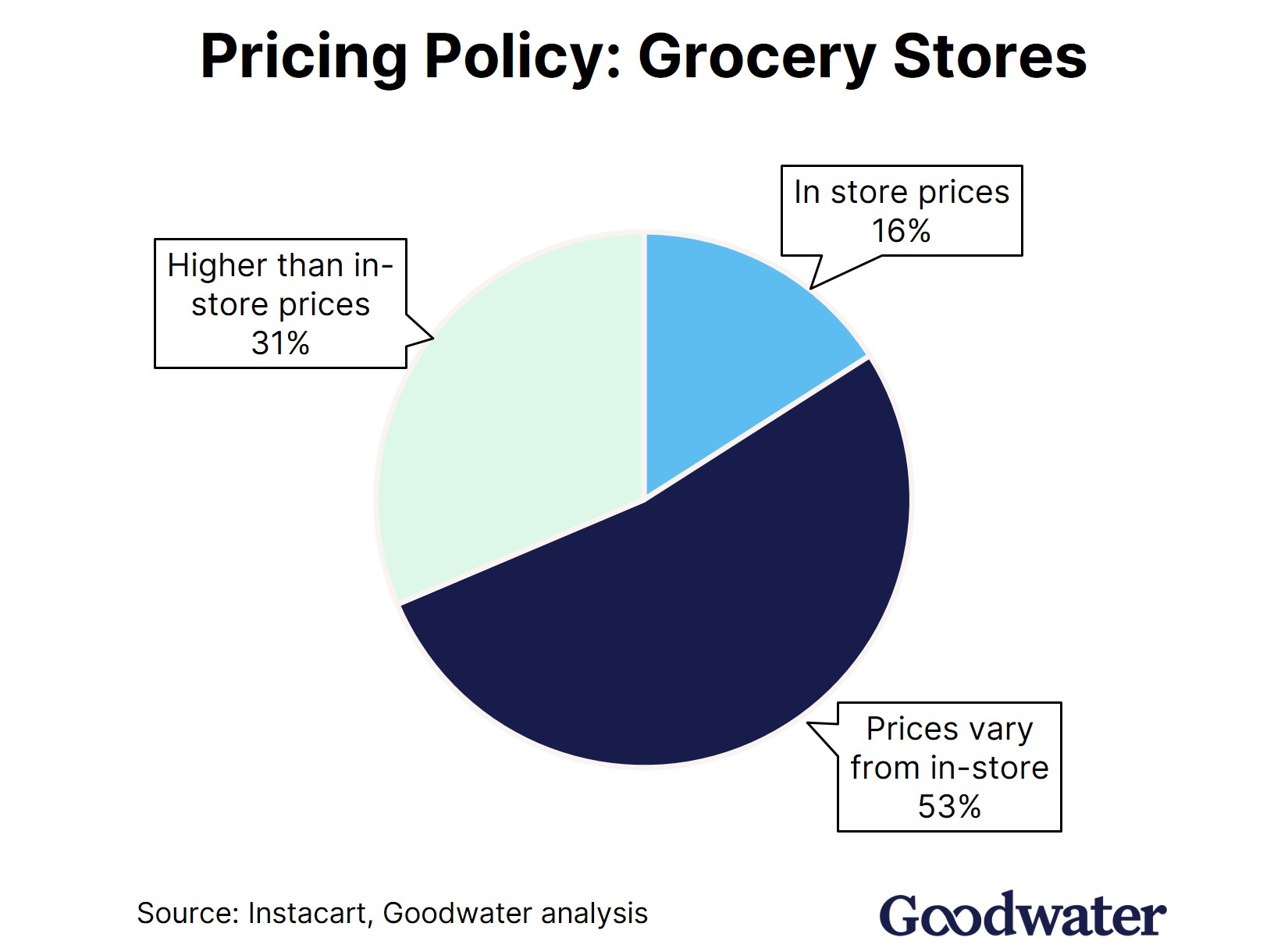
Instacart has three pricing levels:
- Everyday store prices — the same as in-store
- Prices vary from in-store — could be the same or higher than in-store
- Higher than in-store prices — higher than in-store
From our data scraping, we find that 84% of grocery store prices are different from in-store prices, and that they are almost always higher.
Below is a sampling of the most popular grocery SKUs in every American kitchen, sold by the two largest publicly-traded grocery chains in America, and how those prices compare with Instacart:
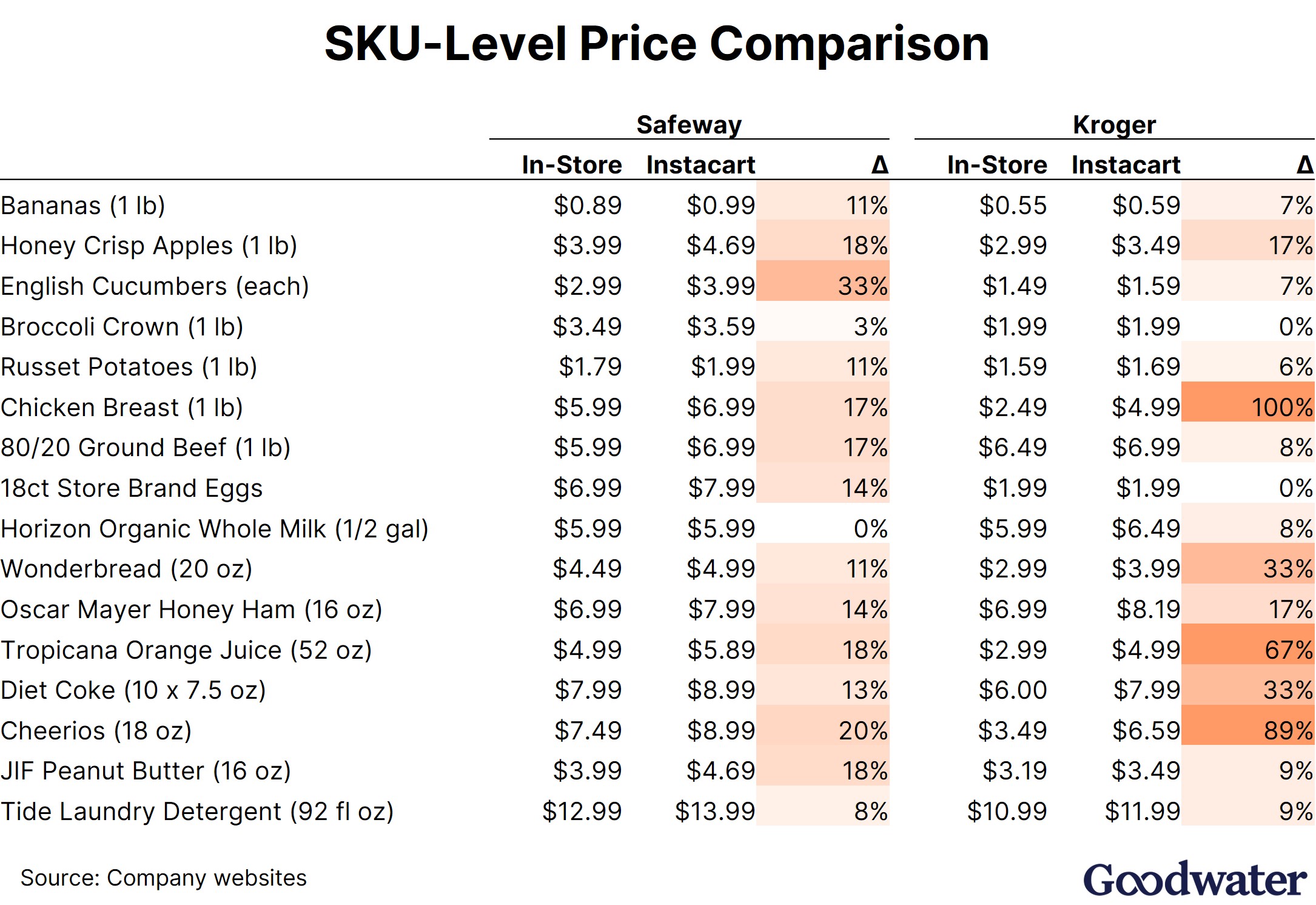
Markups can range from none (milk and eggs) to 100%+ (chicken) with no clear trend from store to store. It can get even worse for shoppers who only buy on-sale items, as those discounts are not always reflected on Instacart.
Overall, we estimate that on average, users pay 15% more when there is a markup.
Fees
Beyond higher SKU pricing, Instacart also charges platform fees. According to Instacart's website, there are seven Instacart-specific fees that can be added to a user's order:
- Delivery fee
- Heavy fee
- Service fee (with a special alcohol fee)
- Long-distance service fees
- Priority fees
- Pickup fees
According to Instacart's S-1, "in 2022, retailers and customers incurred an average of $16 in fees." However, looking only at basic service fees, we see that they vary by retailer and by region:
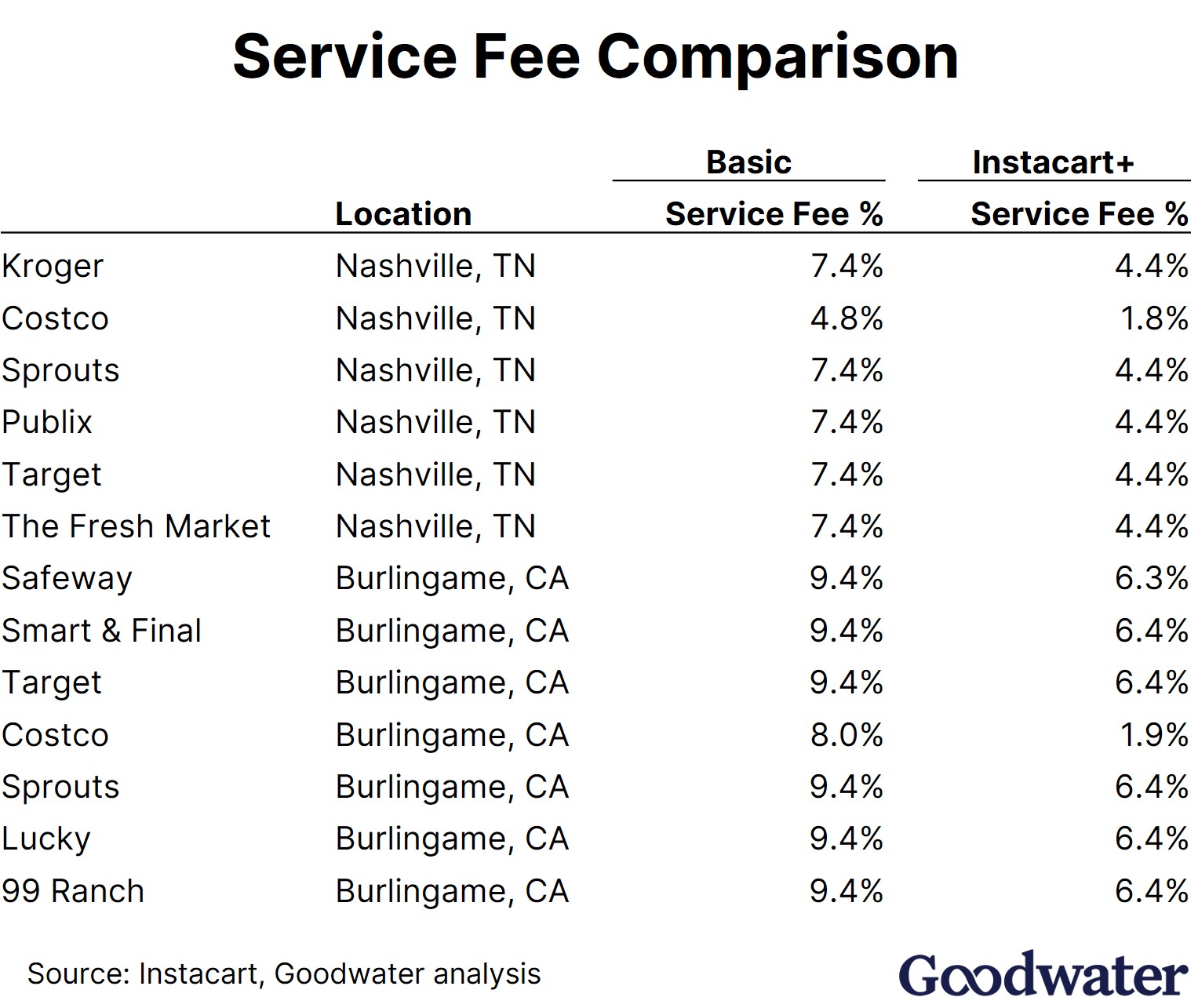
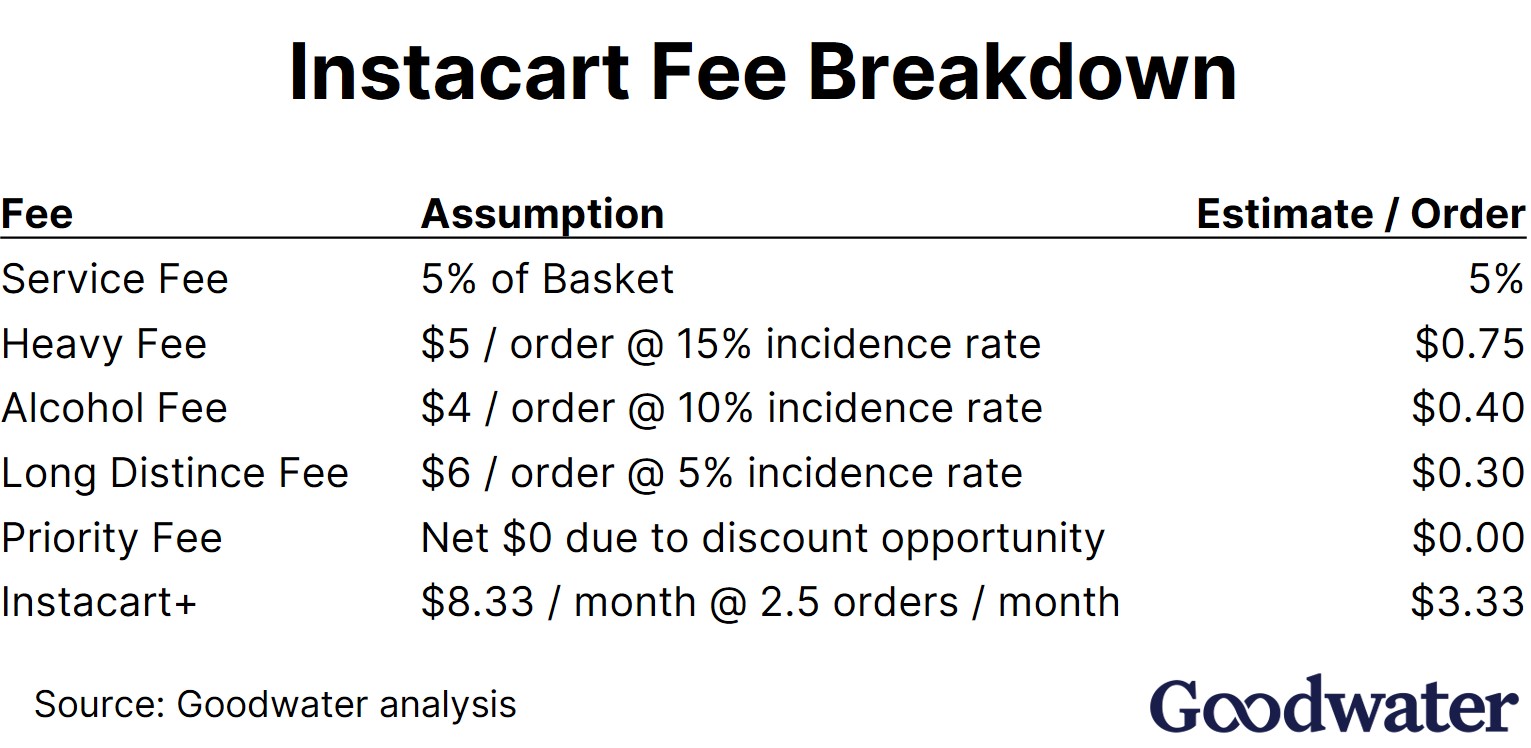
After compiling all the different fees, our best estimate of each one is shown below. Fees will inevitably be variable, based on the retailer, shopping habits, and more.
Tipping
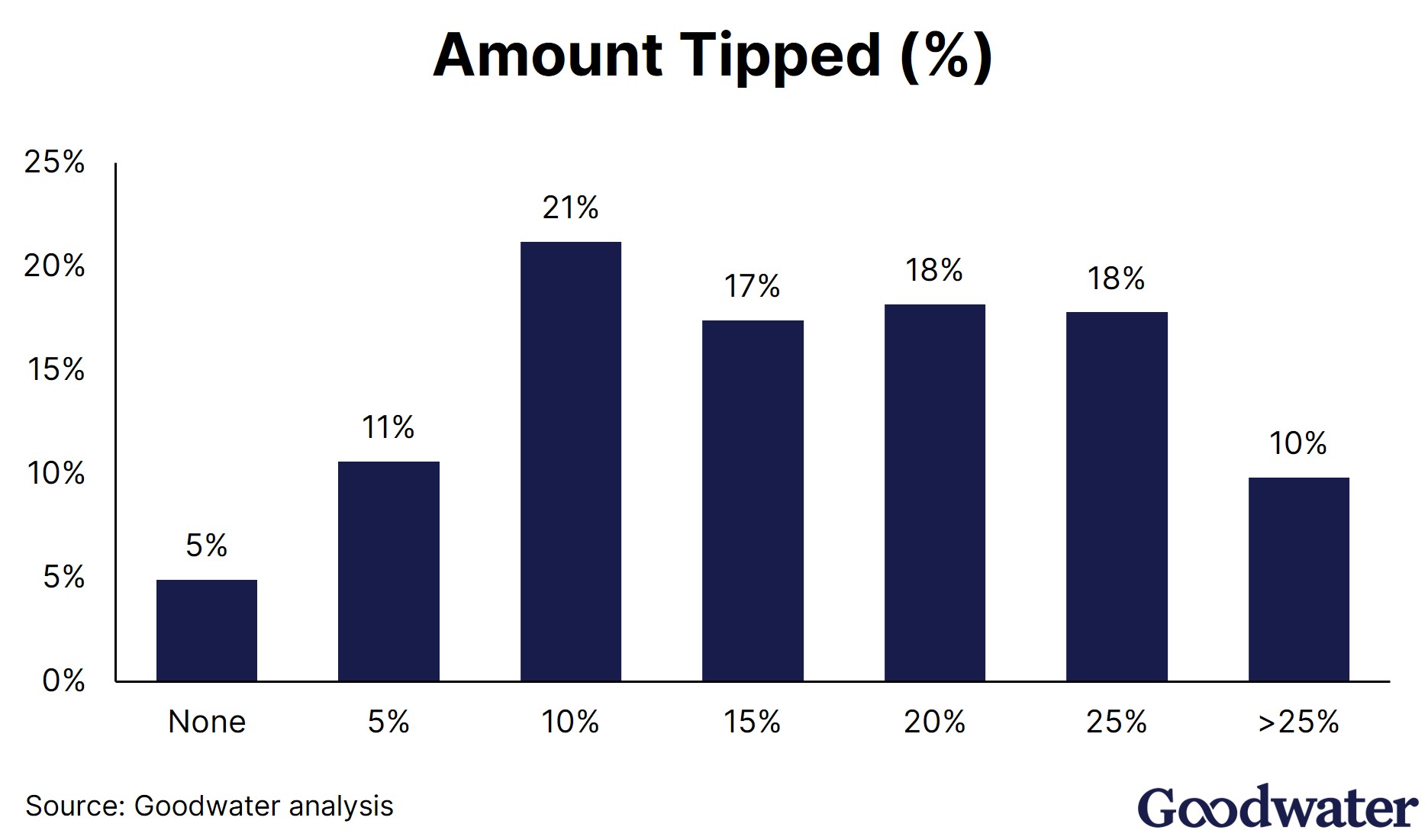
We surveyed 264 Instacart users. How much is tipped varies widely by user, but as a whole, users tip around 15% of their basket size.
Total Cost of Instacart
Combining all three factors, the average Instacart user can expect to pay 40% more than if they purchased the items in-store. In other words, for a $110 order on Instacart, a customer is getting only $78 in goods and paying $32 for the convenience of delivery.
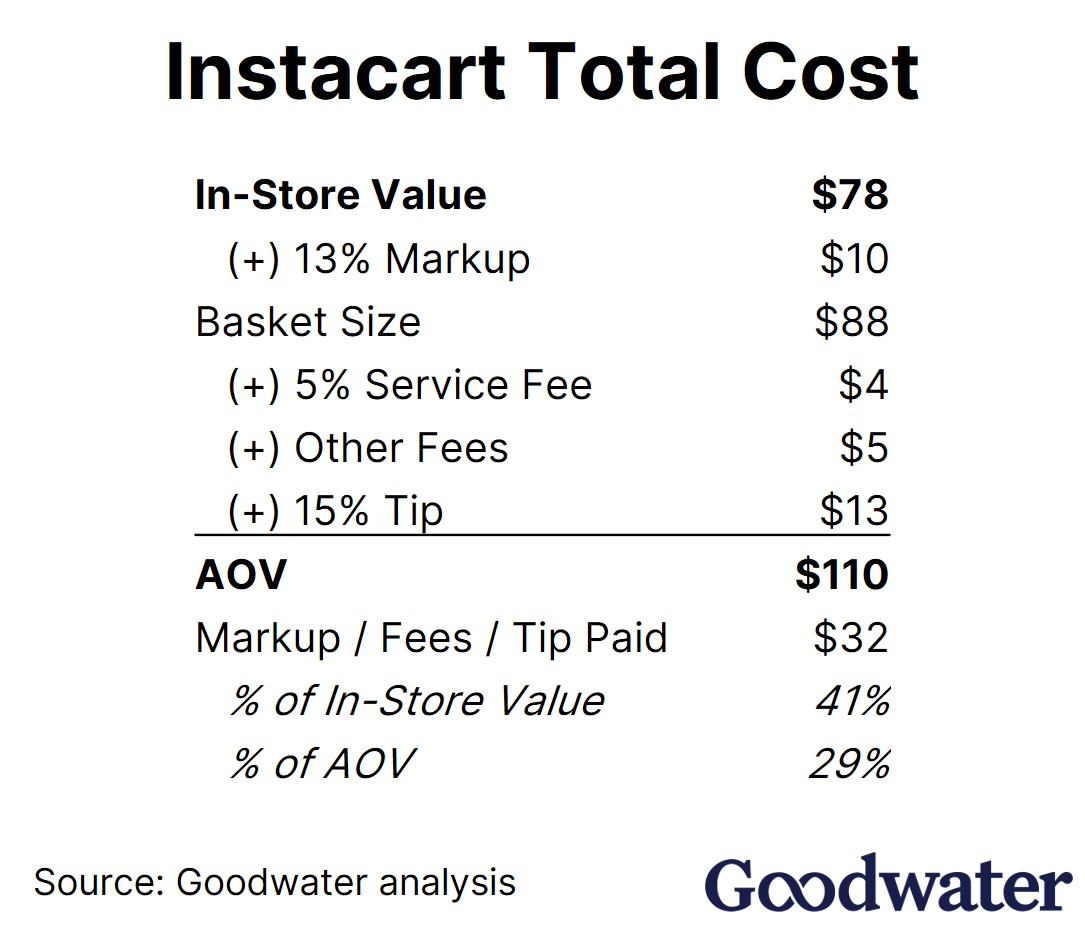
Note that this excludes taxes, which rise with the more expensive basket but are highly variable based on local law. It also assumes users are subscribed to Instacart+, which is the logical thing to do if you use Instacart even as little as once per month.
TAM Saturation Is a Real Possibility — But Instacart Has the Best Grocery Customers in the Industry
Instacart is an expensive product. It effectively charges a 40% premium over a regular grocery store, and because of that difference, it is unlikely to appeal to the entire US market — especially in today's macroeconomic environment. But that is the point of the service: Instacart's customers aren't the budget consumer. Instead, Instacart's customers are among the most valuable grocery customers in the industry, and the platform provides a sticky value proposition for them.
We can dig into the external data and survey results that show this customer dynamic.
Instacart's User Growth Has Flattened as Pandemic Tailwinds Have Reversed
Instacart is well aware of the potential challenges in user growth. Its S-1 shows monthly order numbers flattening as pandemic tailwinds have reversed:
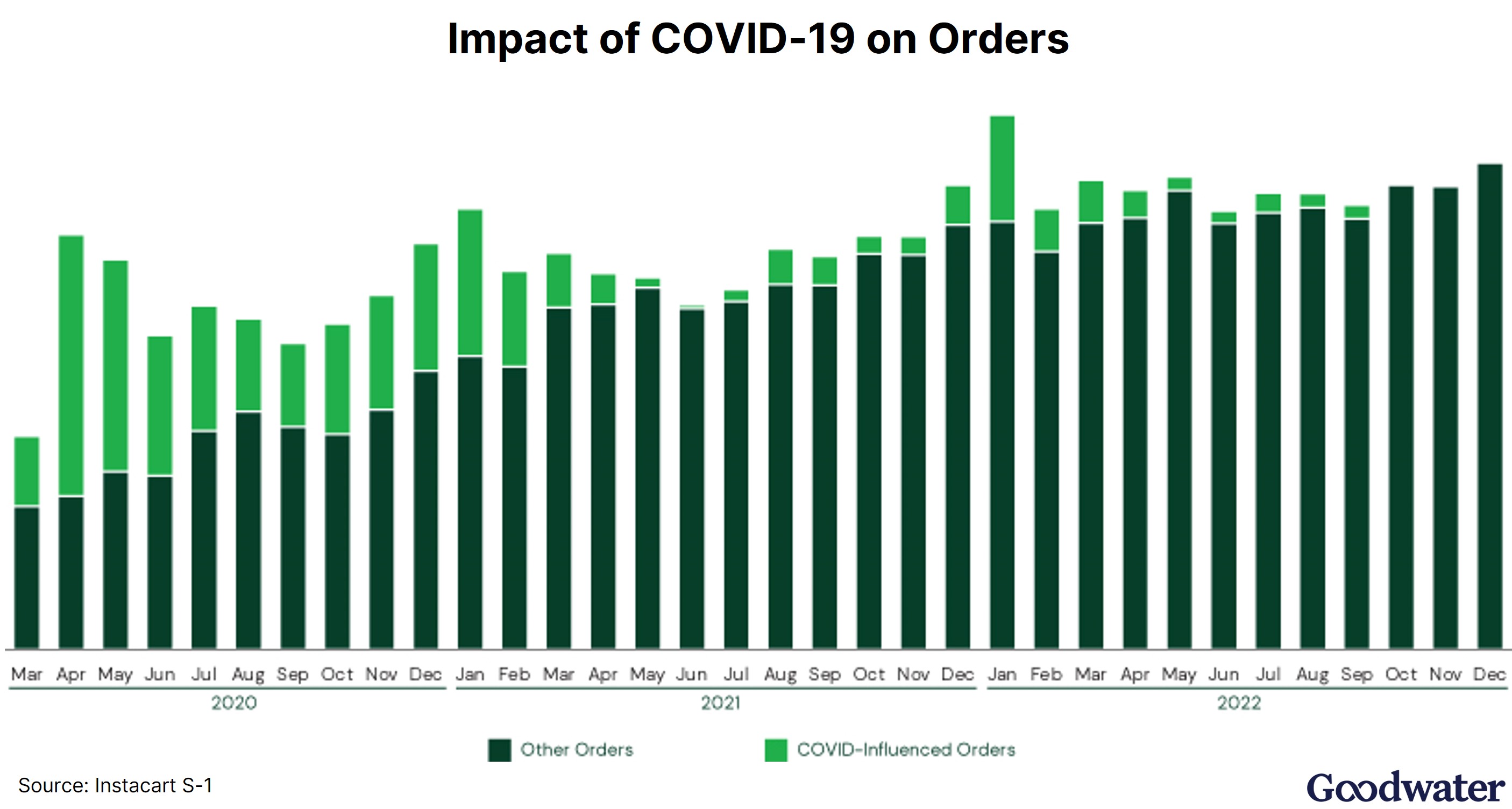
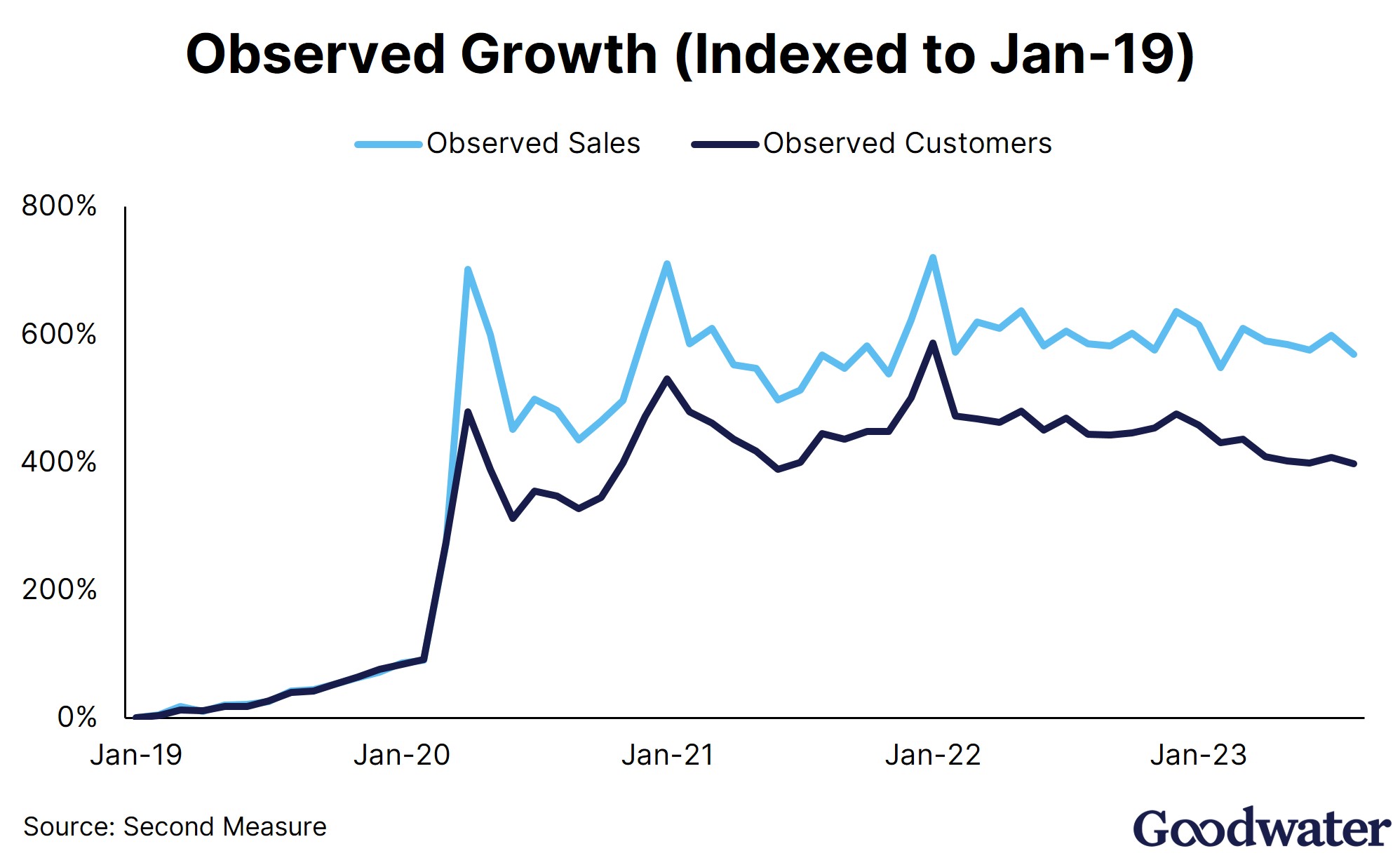
External data sources corroborate this trend and show that the slowdown has been driven by the number of customers having peaked:
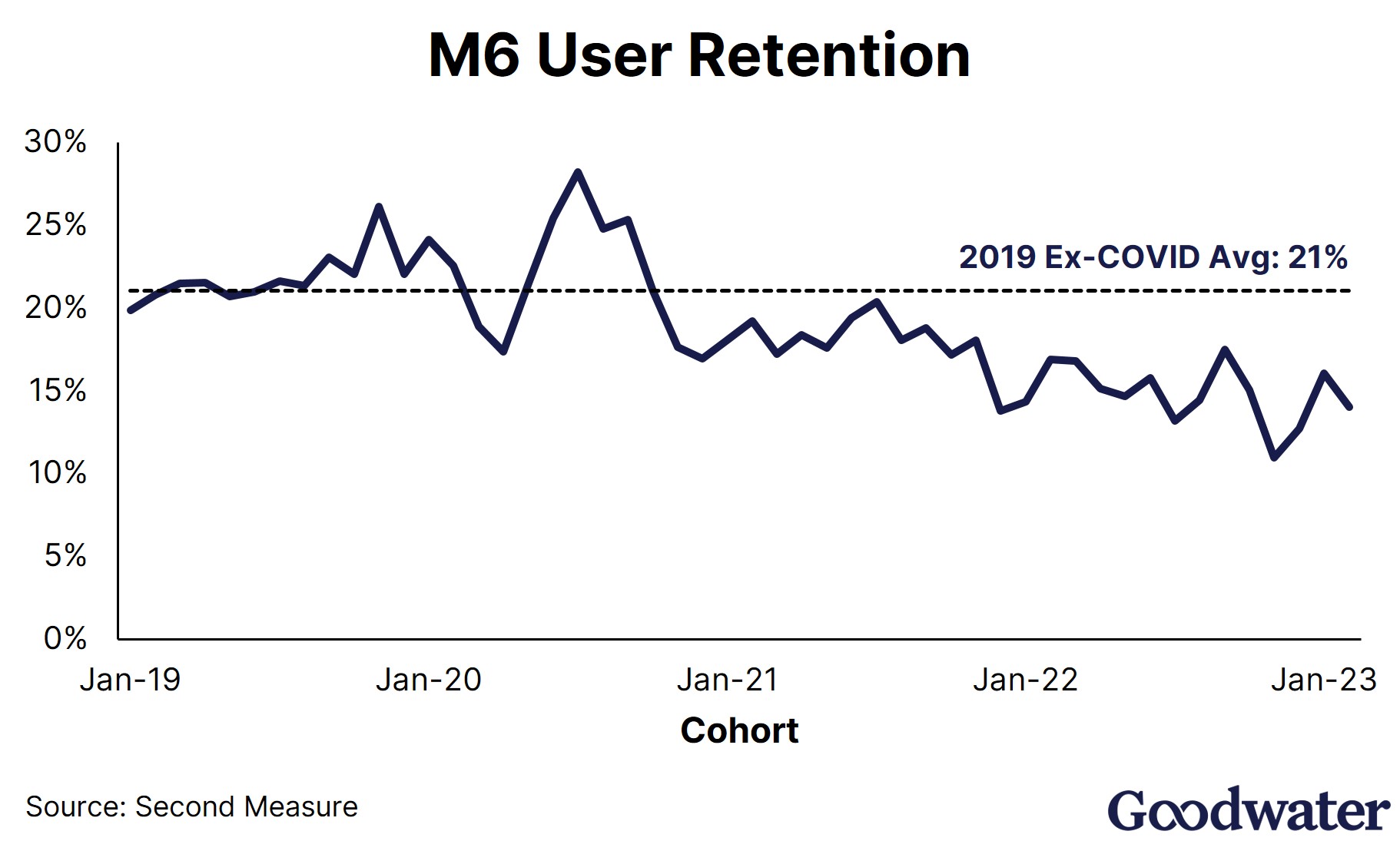
New users acquired today are also less retentive, with M6 retention decreasing from ~21% to 15%:
This ties to the sharply increasing customer acquisition spend in recent years, which is generally an indicator that it is getting more difficult to find quality customers.
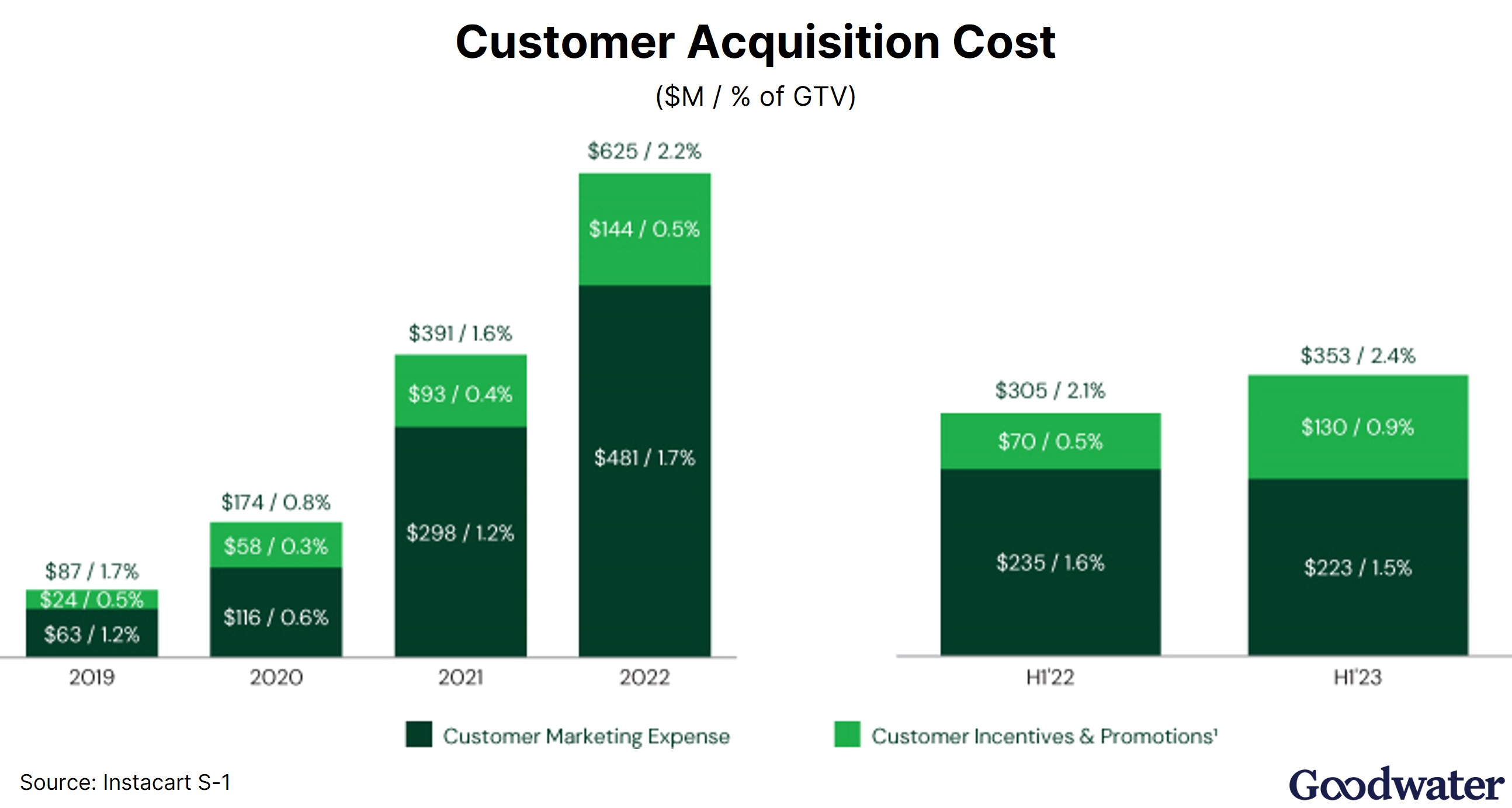
Paired with the commentary from management in the S-1, it is clear that figuring out how to grow the business is going to be one of the key questions going forward.
But Instacart's Remaining Customers Are Strong Grocery Consumers
What the topline numbers fail to show is the quality of the user base.
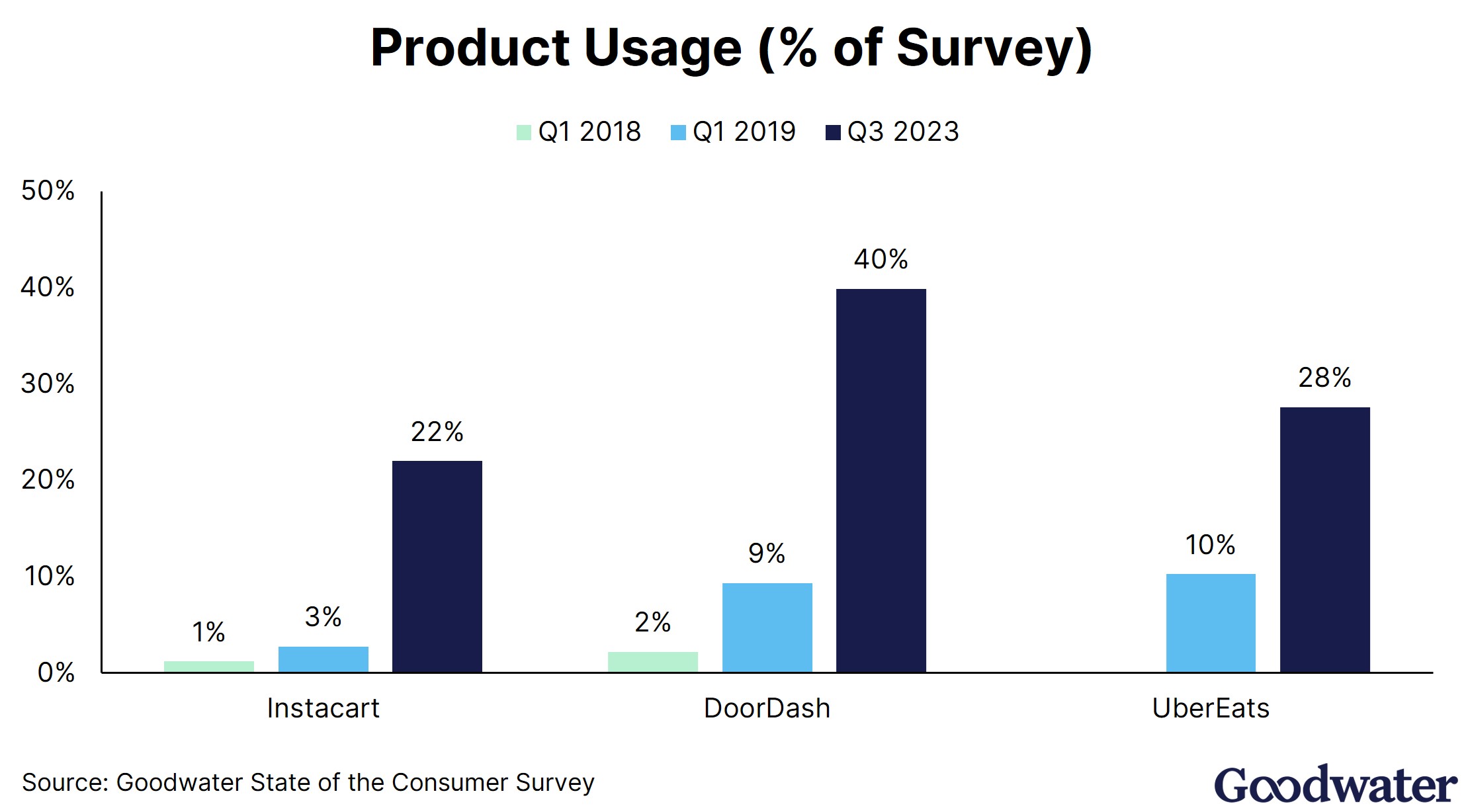
Goodwater has run a cross-sectional survey over the past five years that tracks consumer attitudes toward a wide panel of consumer tech services. Results indicate that before the pandemic, Instacart had the lowest penetration of any delivery service at 3% (versus DoorDash and UberEats at 9–10%) in Q1 2019. However, usage surged during the pandemic, ballooning to 22% of survey respondents:
Attitude toward the service has also improved — 68% of Instacart users report increasing usage, versus 50% pre-pandemic. That is a larger shift than DoorDash over the same period:
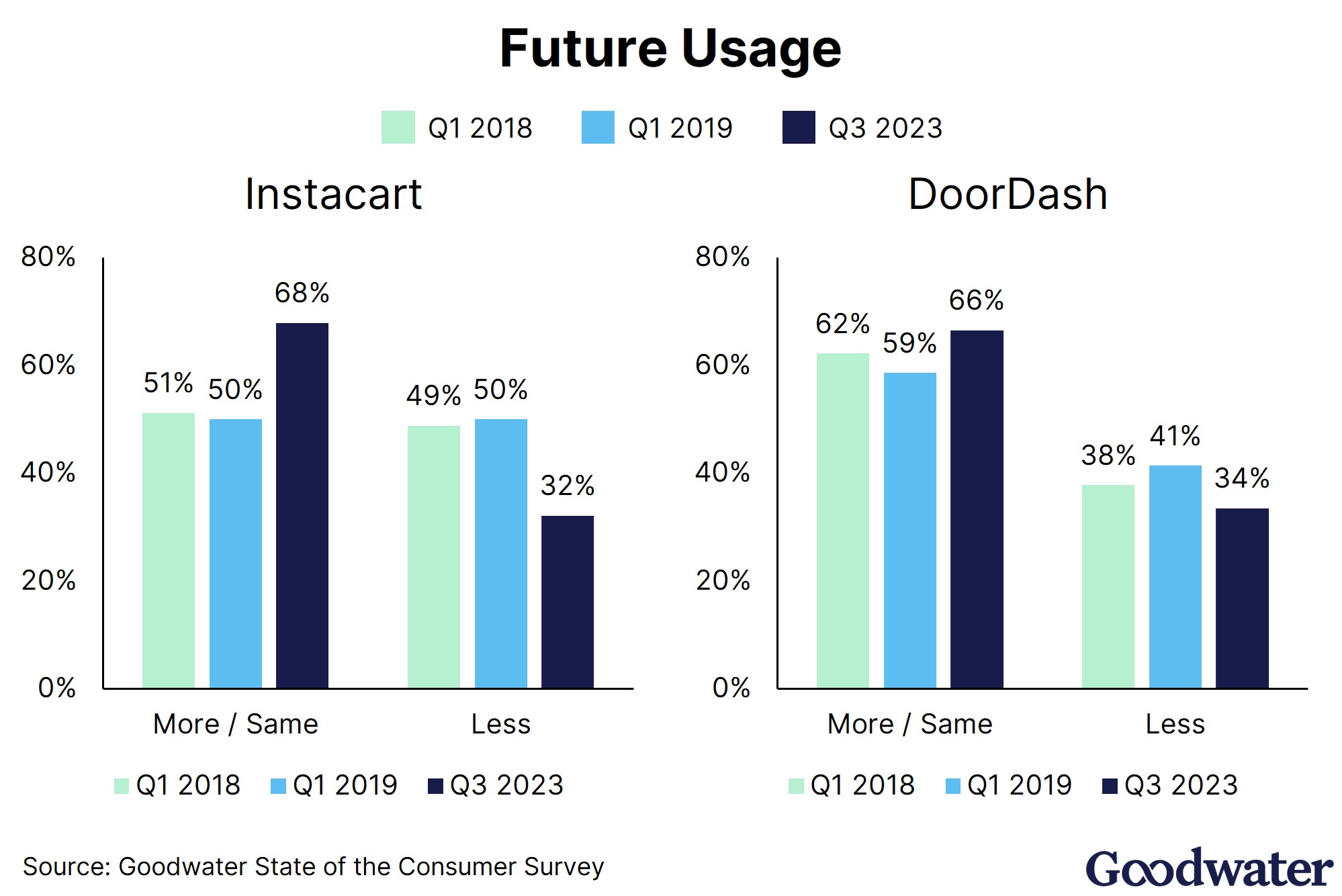
So while the wider perception is that Instacart's value proposition is weaker post-pandemic, Instacart users actually see a stronger value proposition as the platform has scaled.
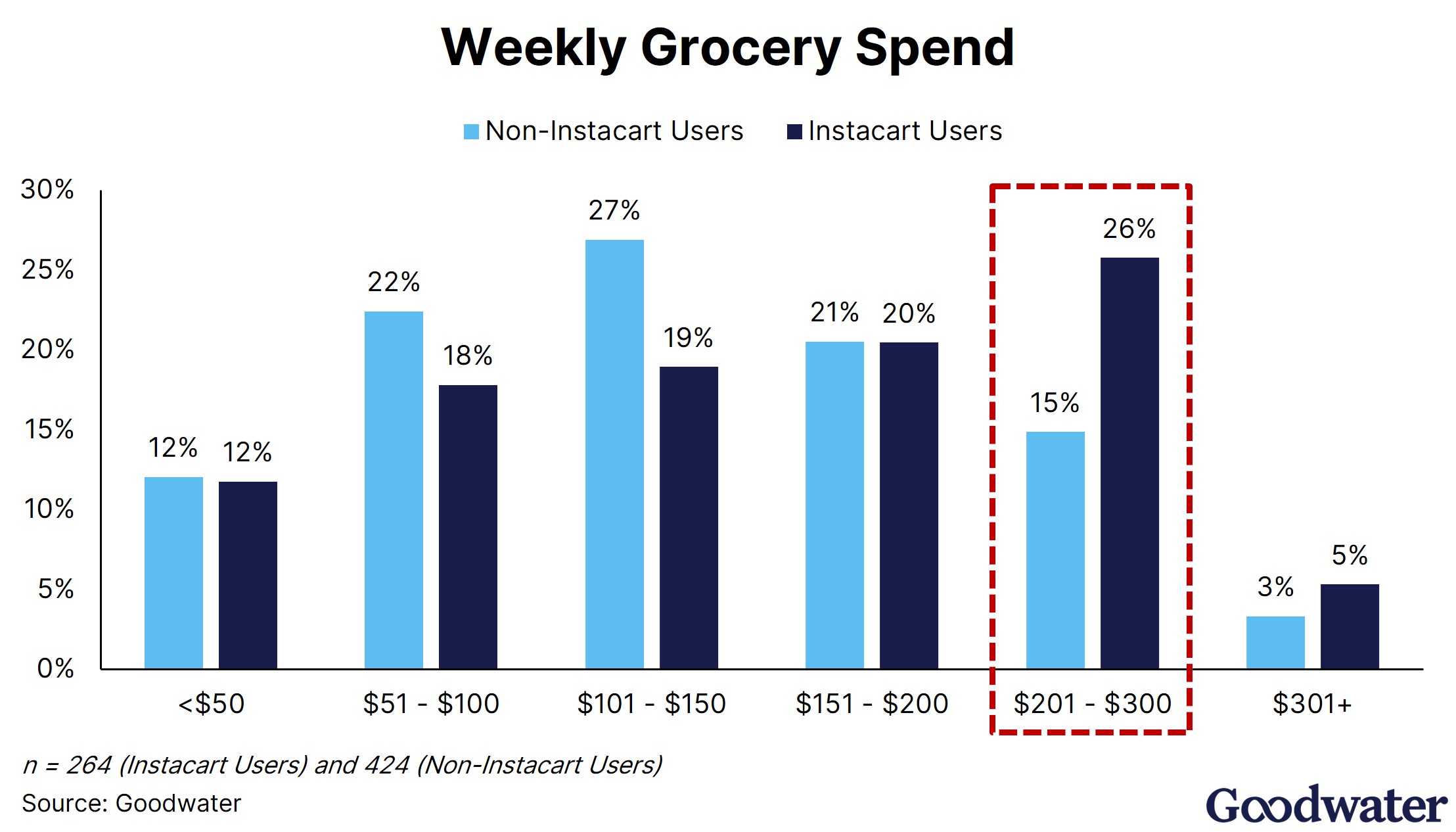
And Instacart users are exceptional grocery customers. While only 39% of non-Instacart users spend more than $150 on groceries each week, that jumps to 52% for Instacart customers — where the biggest group spends $201–300 per week:
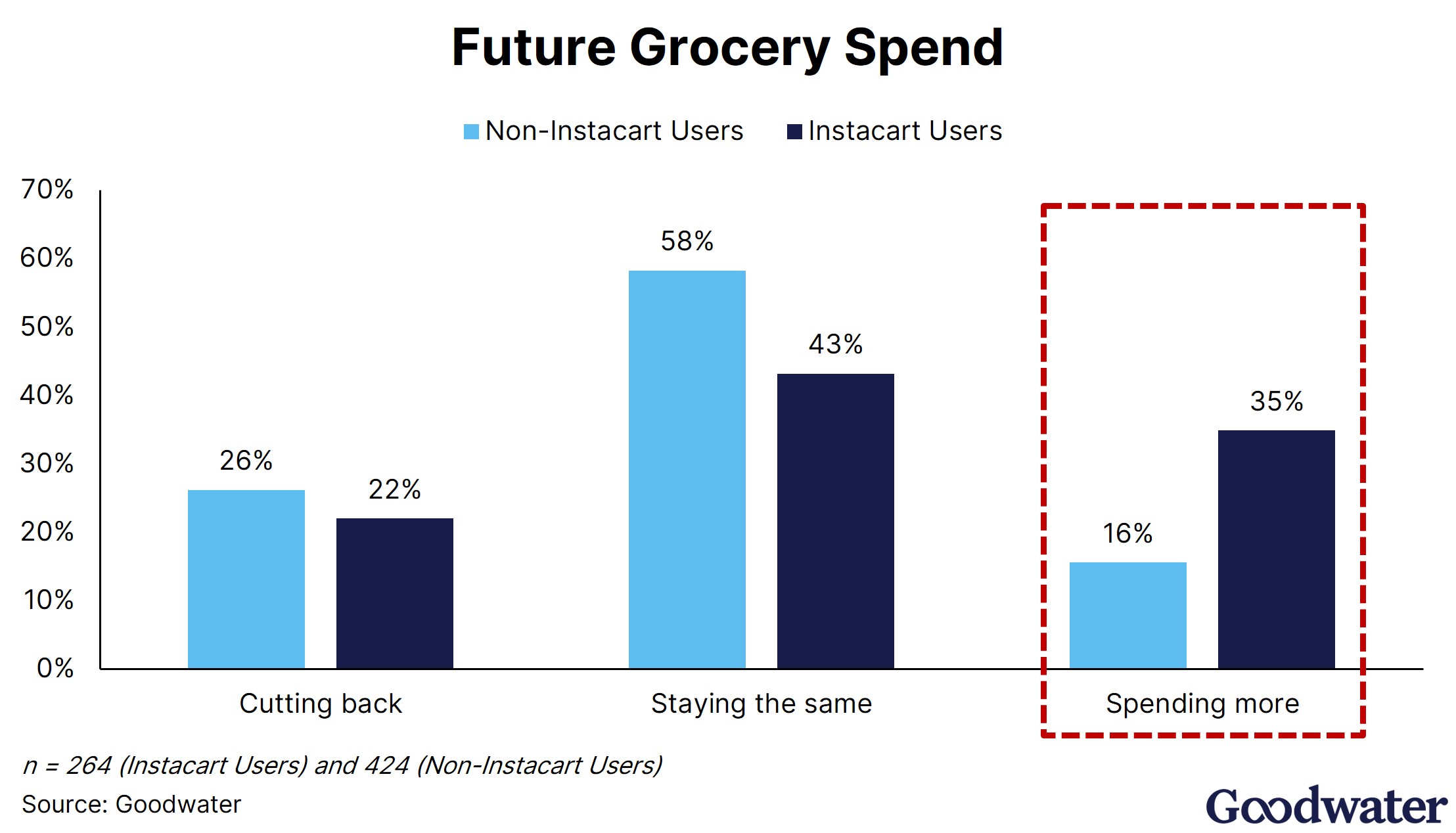
That gap is expected to widen: 84% of non-Instacart consumers expect to cut or hold grocery spend flat over the next three to six months, but over one-third of Instacart users want to increase grocery spend:
Instacart's customers are also much stickier than the rest of the grocery ecosystem. 56% of Instacart customers come back in the year after first purchase, exceeding Costco, Walmart, and regular grocery stores.
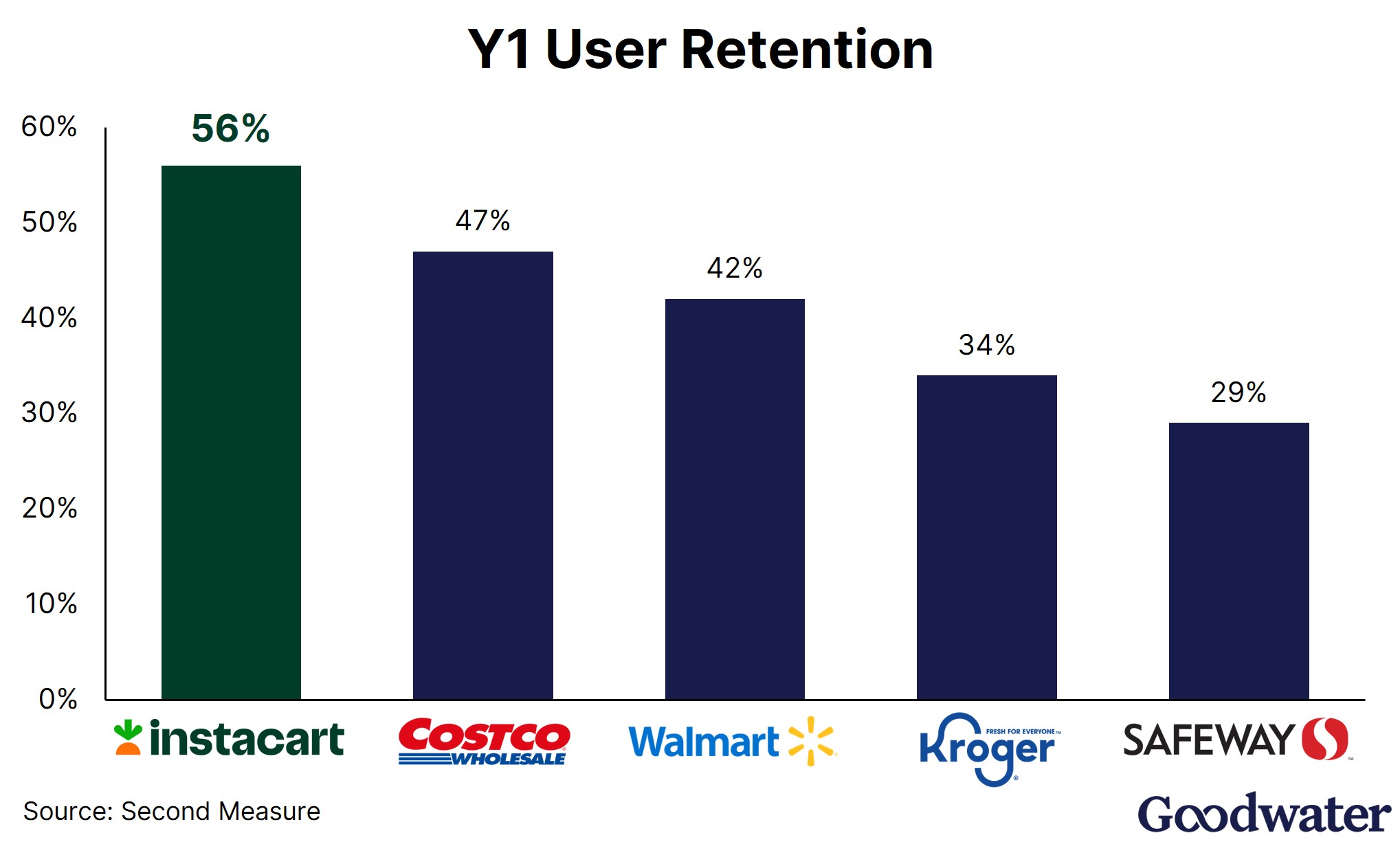
The stickiness of that user base is an indication of its relative customer appeal despite the high fees, and speaks to Instacart's unique position as one of the few providers of grocery delivery in the market today.
With its fee markups, Instacart isn't likely to appeal to everyone. But it is incredibly appealing to its core user base — among the highest-spending and most engaged grocery shoppers in the industry. And that points to how Instacart can keep growing: instead of chasing raw user growth, it can lean into serving these highly engaged customers with better service offerings.
Possible Ideas From the Early-Stage Venture Ecosystem
A number of ideas around the delivery space have emerged in the early-stage venture ecosystem around the world. While there have been countless variations, here are three areas we've seen at the earlier stages that could be interesting opportunities for Instacart.
1. Go In-House With a First-Party (1P) Delivery Tier
A 1P model can be capex-heavy, cash flows are hard to manage, and operational efficiency is a recurring challenge. But with the right technology and model, we've seen the possibility for a 1P model to succeed — and it could look something like the following:
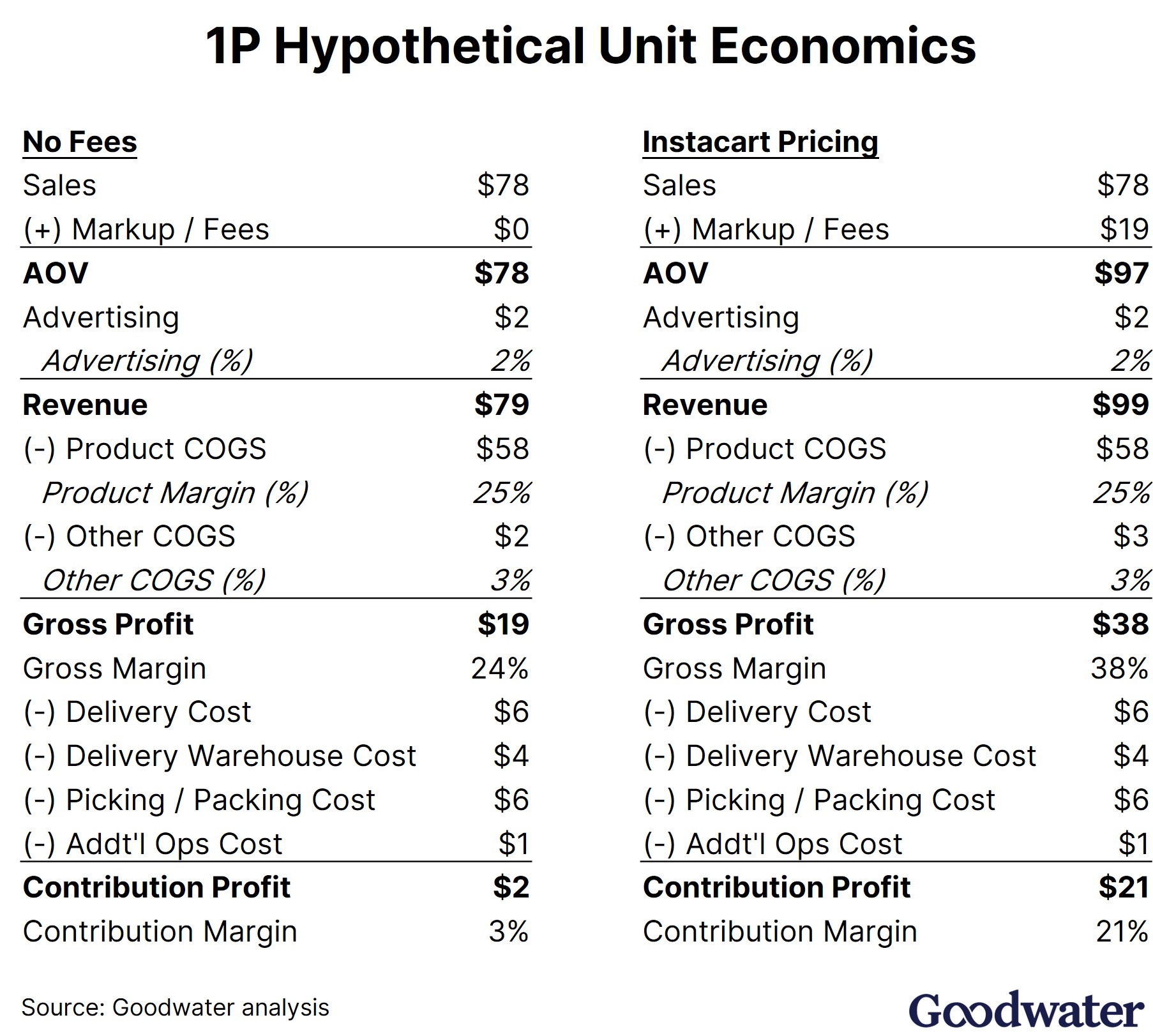
A 1P model is a long-term investment that requires both capital and a new muscle to be built within the business. But if done right, it can open up a lower effective price to consumers and, in Instacart's case, expand the TAM to a larger set of more price-conscious consumers.
It is important to note, however, that while this could be an expansion opportunity, a 1P model brings Instacart into direct competition with its current retail partners — and into direct contradiction with its stated goal of "bring[ing] the grocery industry online and help[ing] make grocery shopping effortless."
2. Order Hyper-Batching
Instacart has a limited form of order batching today — if you are willing to wait a few hours, it can offer a couple of dollars off your order. But based on the pricing we've determined, a couple of dollars is unlikely to be enough to convert someone to using Instacart.
An idea explored in the early-stage venture ecosystem is whether something more restrictive (e.g., scheduling days in advance with restricted time windows) could increase batching substantially and drive enough savings to pass on to the user. It has long been a dream of DoorDash and UberEats to pick up 10+ orders from a single restaurant and deliver them all to customers in a very tight radius. The model would look something like this:
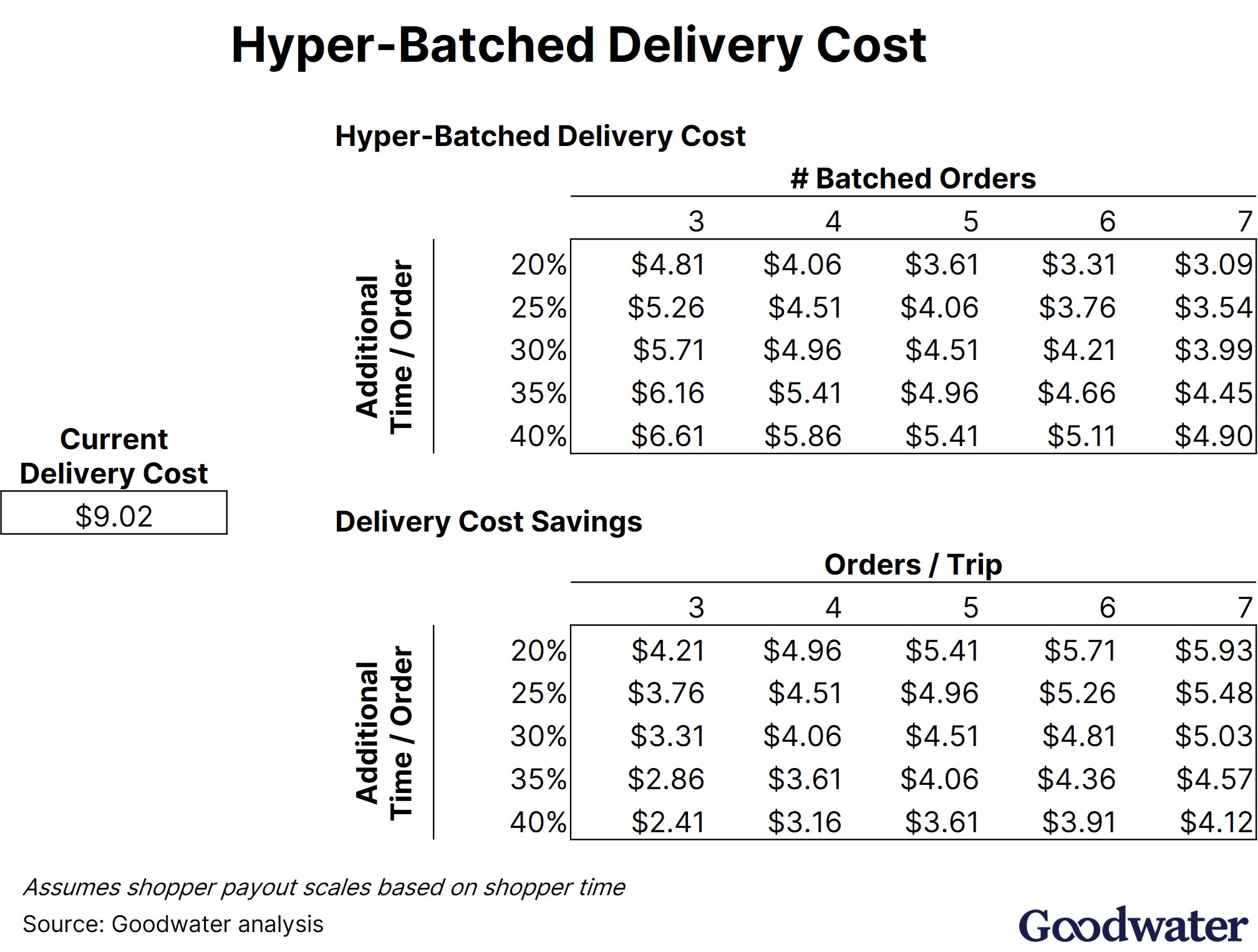
With just a few orders batched, Instacart could lower the direct fee charged by $3–5 per order (from ~$9). While total fees would remain relatively high at ~$28 and would be unlikely to spur a massive TAM expansion, introducing a product offering here could act as a retention mechanism for customers interested in trading money for time.
Despite these challenges, there are a few examples of this worldwide, where entrepreneurs have gotten around the constraints by working with a limited number of partners to aggregate demand and by requiring scheduling well in advance. We've seen this combined most often with the 1P model to help with picking and packing efficiency and to ensure enough demand density to make it cost-effective.
3. AI Shopping Engagement
An emerging area across consumer tech is using AI as an engagement mechanism in the shopping experience. Ideas are still relatively nascent, but a number have centered on using AI to parse recipes and aggregate the ingredients into a basket of items to automatically purchase. Brain Technologies has an existing flow that glimpses what a possible user experience could look like.
Because of Instacart's position between the grocery retailer and the customer, it's easy to imagine an experience where items are selected automatically based on existing user preferences, with tailoring of the recipes.
Instacart May Not Be for Everyone, but It Has Plenty of Room to Grow
All of the available data on Instacart supports the picture that user growth is slowing as pandemic tailwinds have lifted. That is not surprising — a ~40% premium over a core grocery experience is likely to price a portion of the market out of the core Instacart service.
However, the data also suggests that the customers who remain are among the most engaged grocery shoppers, spending well above the industry average and retaining at a higher rate than regular grocery stores because they find real value in Instacart's service.
It's because of this strong core of customers that Instacart occupies a differentiated position in the grocery ecosystem — and that position gives the company a great opportunity for future growth by leaning in and serving those customers (and others) with an even wider variety of services for years to come.